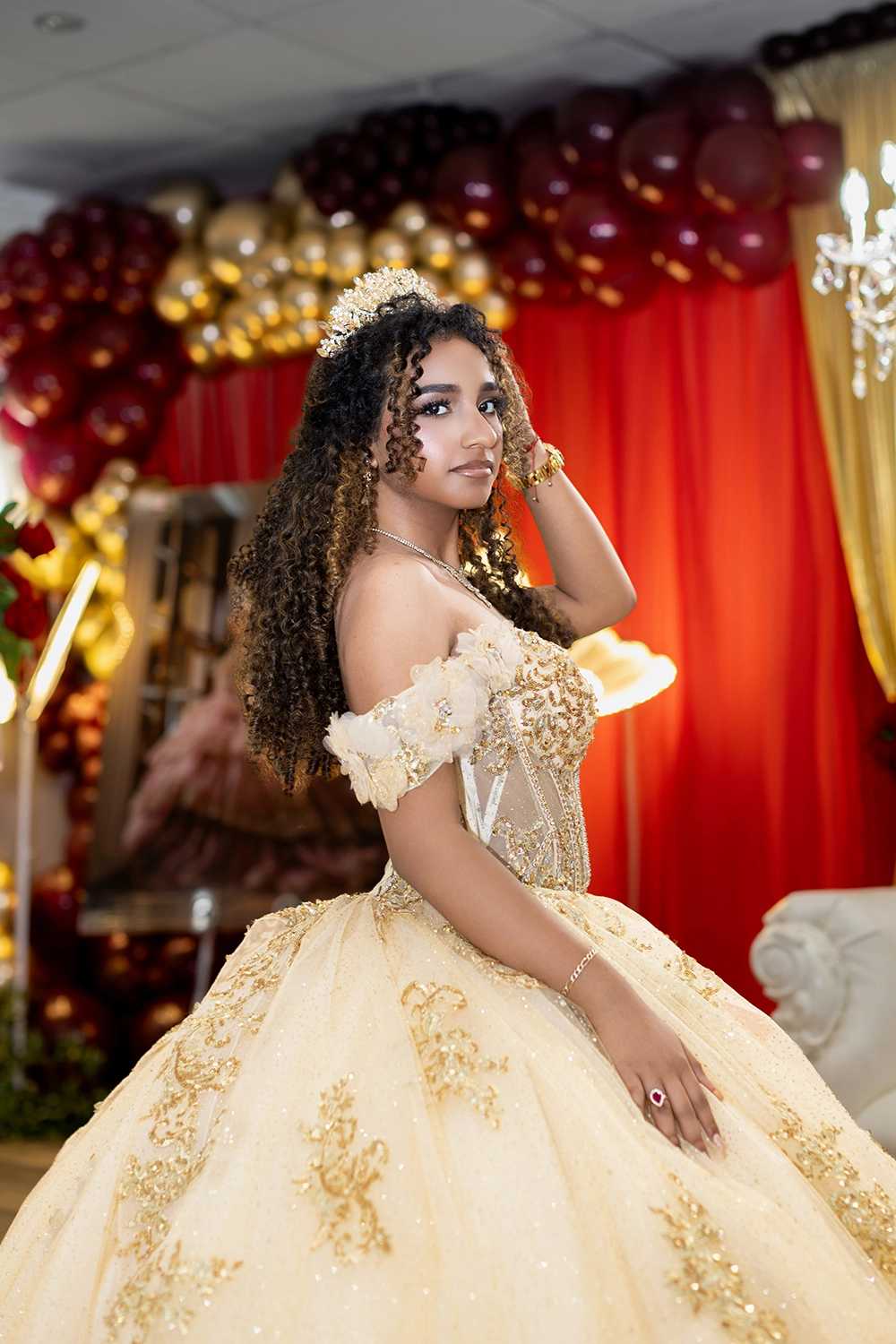
At the beginning of Naomi’s quinceañera, almost everything was being protected.
The dress had just been arranged. Hair and makeup were finished. Family members moved around her checking details and making small adjustments. The celebration had not fully begun yet, and for a little while, there was still enough quiet to make photographs deliberately.
By the end of the night, very little looked or moved the same way.
The dress was moving across the dance floor. The room was louder. Expressions arrived without warning. Friends and family were no longer thinking about where they should stand.
That progression—from careful portraits to a celebration that could no longer be controlled—is what I remember most about photographing Naomi’s quinceañera at Cuban American Club in West Palm Beach.
It is also what I want quinceañera photography to preserve.
Not one perfect version of the day.
The whole change.
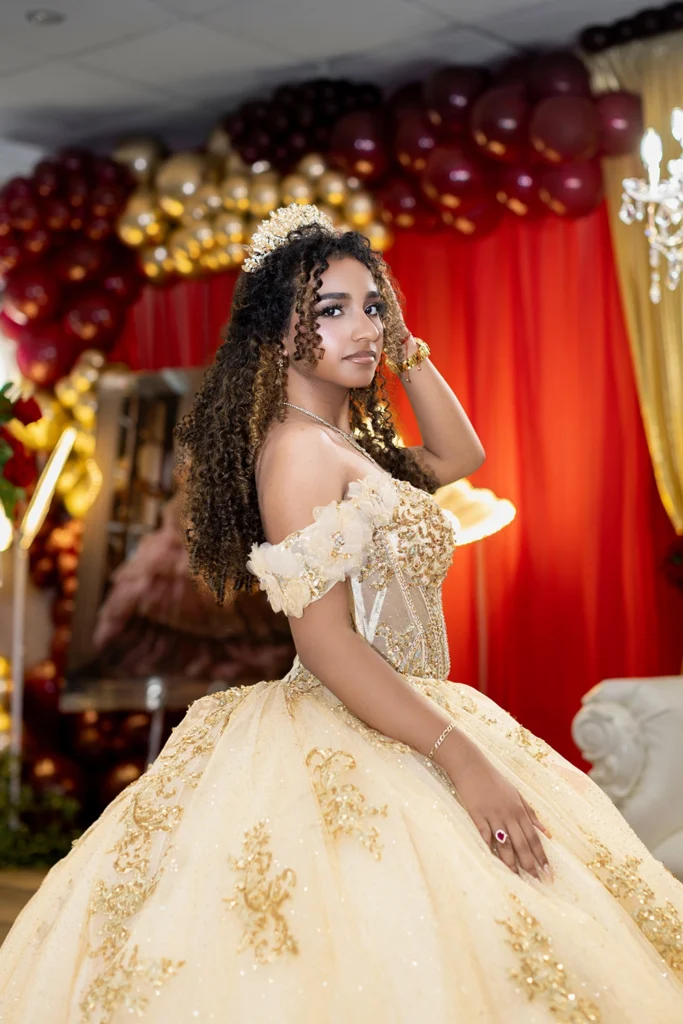
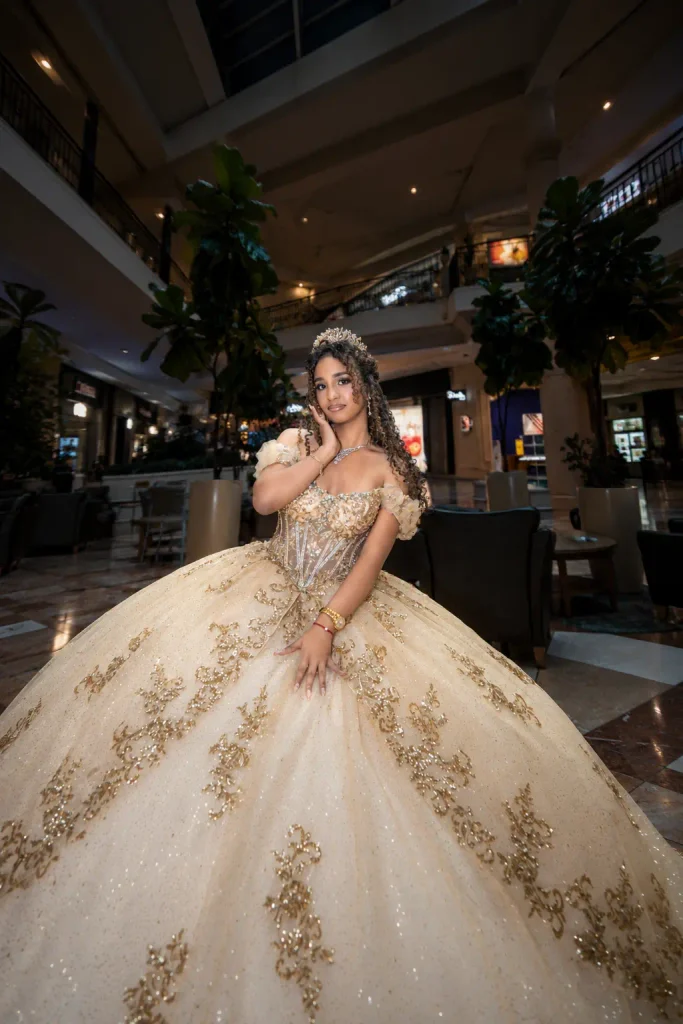
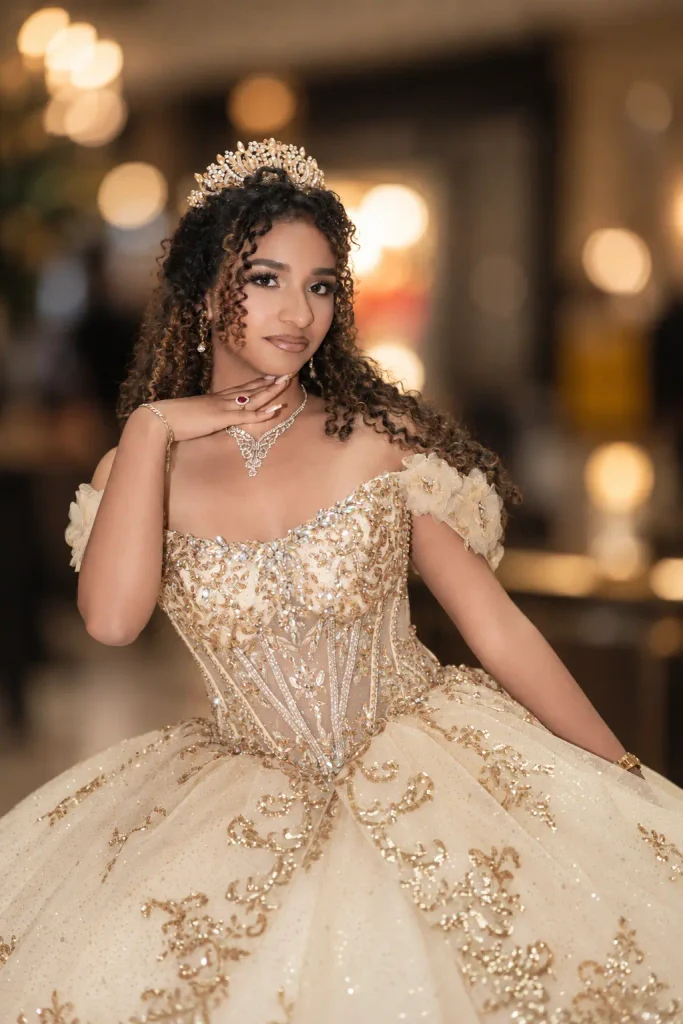
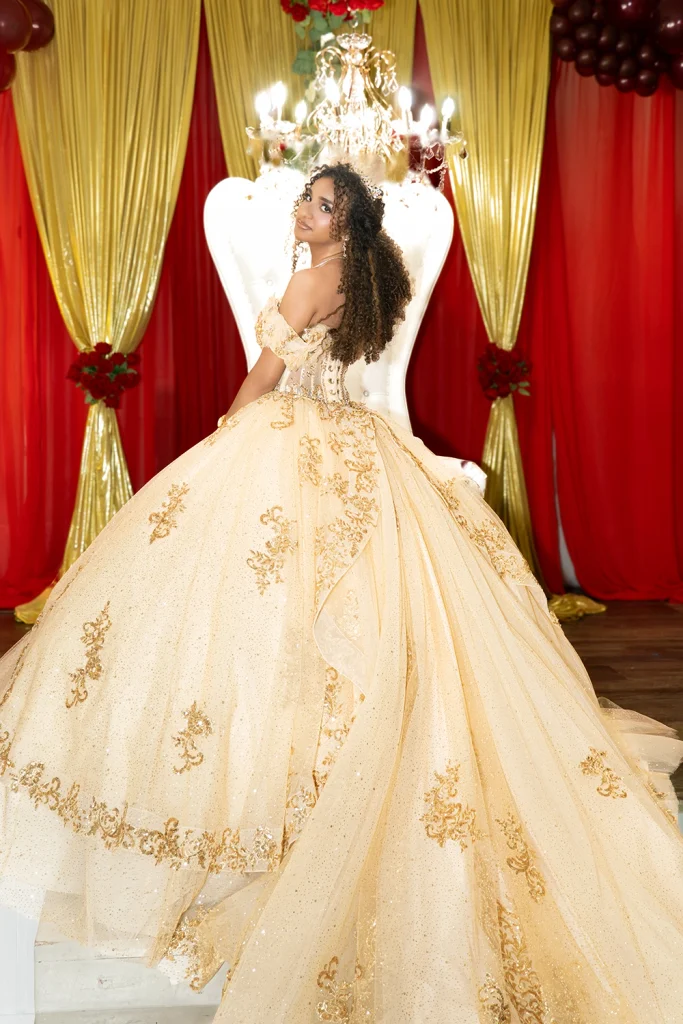
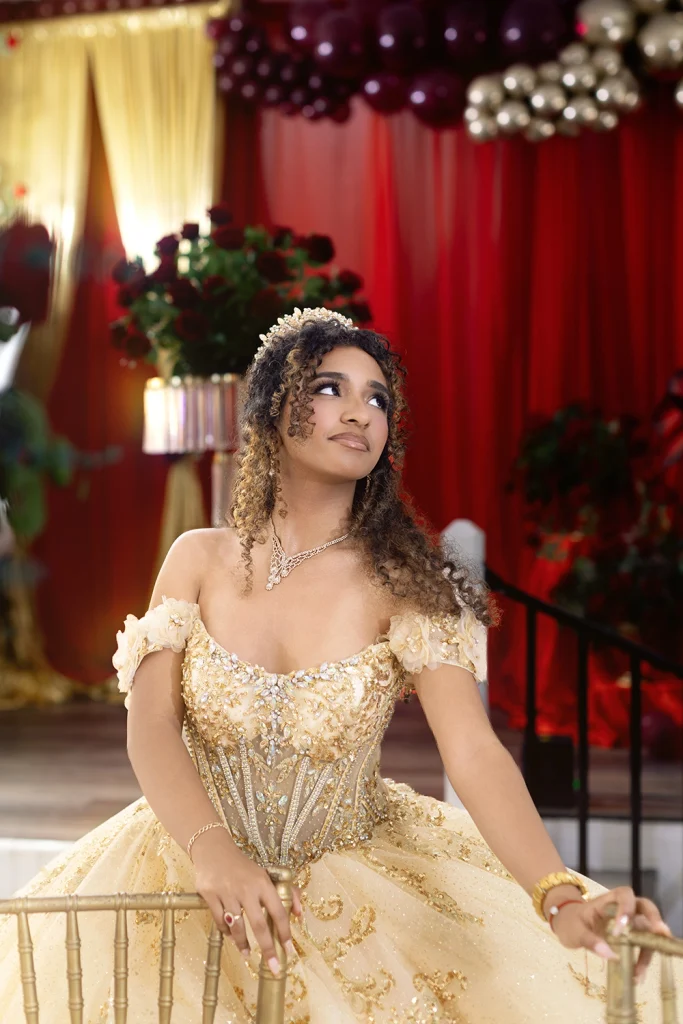
Quinceañera photography in West Palm Beach, before the room gets busy
A quinceañera may be completely ready for her celebration and still need a few minutes to become comfortable in front of a camera.
Those are different things.
During Naomi’s first portraits, I directed her closely.
Turn your shoulders slightly.
Bring your chin down.
Hold the dress here.
Look toward me.
Now look away.
Nothing complicated.
I wasn’t expecting her to arrive already knowing how to pose. I wanted the first instructions to be simple enough that she could stop wondering what she was supposed to do.
At first, Naomi followed every direction carefully. She would make the pose, wait for the photograph, then look toward me for the next instruction.
That is completely normal.
A quinceañera dress changes the way someone occupies a space. People are watching. The attention is suddenly centered on one person. And for many girls, being photographed this deliberately is not something they do every week.
So I don’t begin by asking someone to “act natural.”
I begin with direction.
Then I wait for the direction to become less necessary.
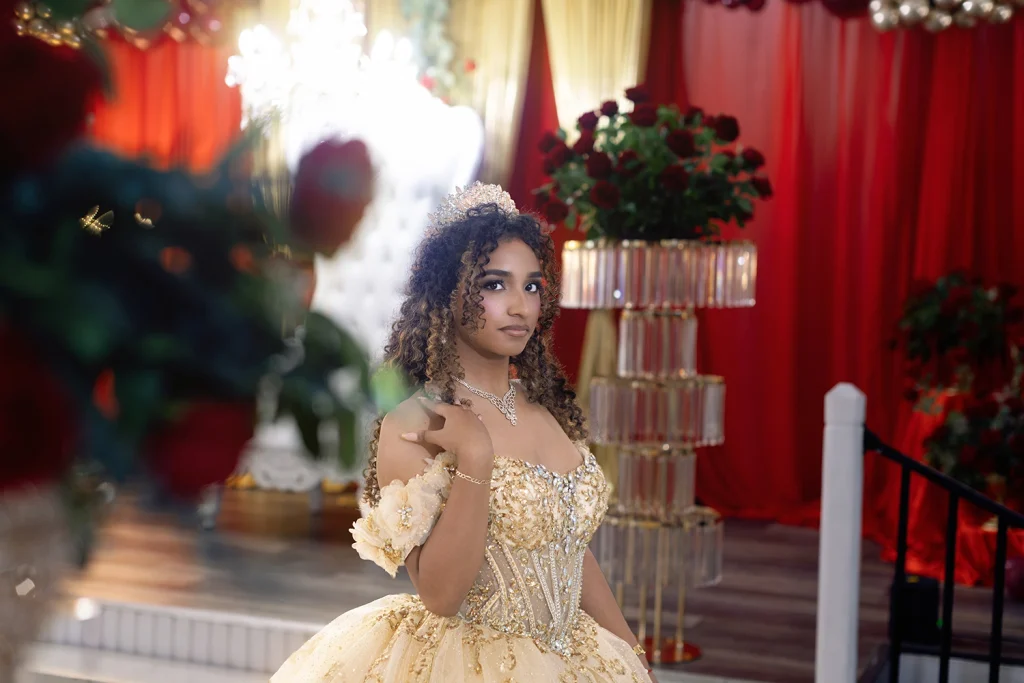
The portraits changed as Naomi became more comfortable
After a while, my instructions became shorter.
Turn.
Walk a little.
Look back.
Let the dress move.
Naomi started understanding what I was looking for without needing every movement explained.
And the photographs changed with her.
The earlier portraits were more deliberate. They showed the dress, the pose and the formality of the occasion.
Later, other things began appearing.
A softer expression.
A small laugh after the photograph she thought I was taking.
The skirt opening as she turned.
A glance away from the camera because someone in her family had said something.
These moments are easy to miss because they often happen immediately after the pose.
The person believes the photograph is finished.
For me, it may just be beginning.
That is one reason I continue watching between instructions.
The carefully built portrait matters. But sometimes the interruption reveals something the pose could not.
A quinceañera portrait is rarely only about the quinceañera
Family changes the rhythm of the photographs.
A portrait of Naomi alone could be constructed patiently. Once parents and family entered the frame, other things began happening.
Someone adjusted the dress.
Someone offered advice from behind me.
Someone made her laugh while I was trying to create a serious portrait.
Those moments are not necessarily distractions.
They are information.
A quinceañera belongs to the girl at its center, but the celebration exists because of the people around her too.
That is why I want the formal family photographs.
They give everyone a place inside the record of the day.
But I also keep watching immediately before and afterward.
A mother standing close to her daughter.
A father looking at his fifteen-year-old girl.
A family together before guests fill the room and the schedule begins moving faster.
Those photographs may not announce themselves as important when I take them.
Time can change their value.
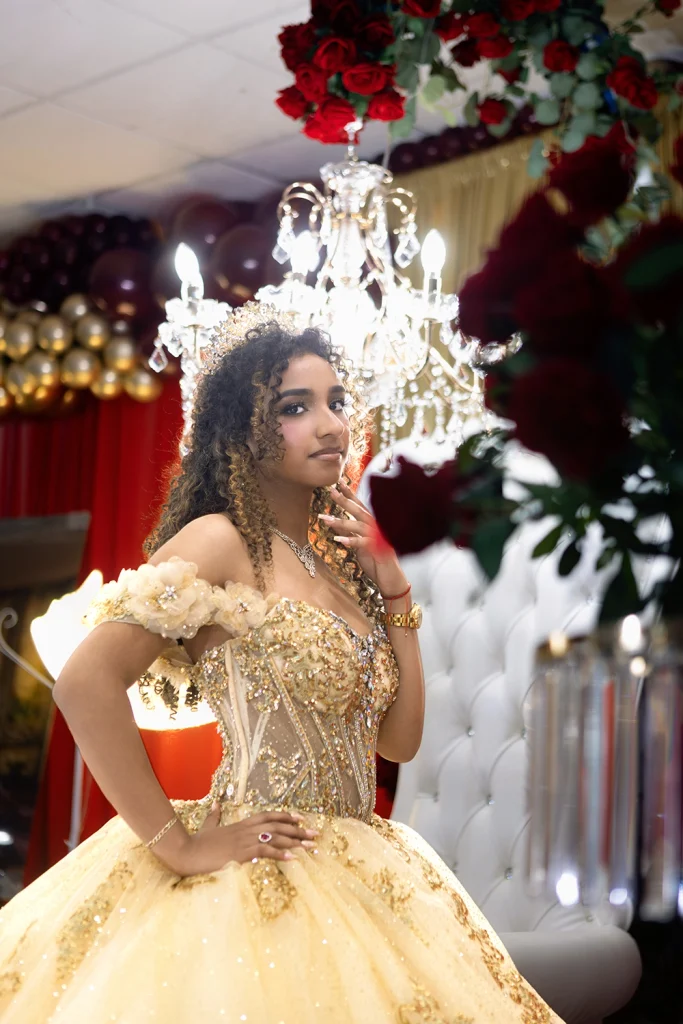
Why I recommend making portraits before the reception gets busy
One practical lesson from Naomi’s celebration at the Cuban American Club is something I would recommend to another family planning a quinceañera there:
Have the quinceañera and closest family members ready a little before the reception becomes busy.
That small amount of time gives us space to photograph the dress, create individual portraits and bring immediate family together without constantly working around arriving guests.
Once the reception begins, the room has another purpose.
It belongs to the celebration.
At that point, I would rather photograph what is actually happening than repeatedly pull the quinceañera away from her own party to reconstruct portraits we could have made calmly beforehand.
You do not necessarily need an hour.
What matters is creating a short protected window before the room begins demanding everyone’s attention.
Portrait time and reception time ask different things from the photographer.
Trying to make them happen simultaneously usually means compromising one of them.
Celebrating at Cuban American Club in West Palm Beach
For Naomi’s quinceañera, Cuban American Club was not simply a name attached to the photographs.
It became part of how the coverage changed.
Before the reception became active, I could think more deliberately about Naomi, her dress, her family and the frame around them.
Later, the same environment filled with guests, movement and activity.
The room stopped behaving like a portrait space.
That was not a problem.
It was the point.
An event venue should eventually become an event.
Once that happens, I stop trying to make every part of the scene behave for the camera.
I start looking for relationships inside it.
Where is Naomi?
Who is watching her?
What is happening just outside the obvious center of the room?
What changed a second ago?
What is about to change?
That is a different kind of photography.
Portraits can be built. Receptions have to be anticipated.
During a portrait, I have options.
If the hand does not work, we move it.
If the dress needs adjustment, we adjust it.
If the light is better three feet away, we move.
We can try again.
A reception rarely offers the same courtesy.
Someone enters the room.
A family member reacts.
Naomi turns toward a friend.
Someone at a table starts laughing.
The music changes and the room begins moving.
There is no reason for any of those things to happen twice simply because I wasn’t ready the first time.
So my job changes.
During portraits, I can build the photograph.
During the reception, I have to recognize it.
That means watching not only the obvious action but what is happening around it.
A parent reacting from the edge of the dance floor can matter as much as the person standing at its center.
A friend’s expression may last less than a second.
A dress that was carefully arranged earlier now takes another shape because Naomi is dancing instead of posing.
The pictures become less controlled.
That does not necessarily make them less successful.
Sometimes it makes them more revealing.
When the celebration takes over
There is a point during many events when the formal structure begins to loosen.
The important entrances have happened.
The family photographs are finished.
The planned traditions have taken place.
People stop asking where they are supposed to stand.
And the party becomes a party.
This is when I begin watching the edges more carefully.
Not only Naomi in the center of the action.
The people looking toward her.
Friends responding to something that just happened.
Family members laughing.
Hands in the air.
Small interactions at tables.
Movement that exists for a few seconds and then disappears.
The photographs made at this point rarely look like the photographs from the beginning of the celebration.
I want that difference.
If every image looked equally controlled, the gallery would tell only one part of what happened.
The dress changes too
At the beginning of a quinceañera, the dress is often treated almost like an object.
It is adjusted.
Protected.
Arranged.
Photographed.
Later, it becomes clothing again.
Naomi moved in it.
She danced in it.
The skirt stopped remaining exactly where somebody had placed it.
That change interests me photographically because it mirrors what happens to the whole celebration.
Early photographs show how the family prepared the day.
Later photographs show what the day did with those preparations.
Both matter.
One does not invalidate the other.
The formal portrait and the imperfect movement can belong beside each other because they are describing different moments in the same story.
Photography and film tell different parts of the same quinceañera
Naomi’s celebration was covered with both photography and film.
That matters because a photograph and a film do not preserve the same information.
Photography can isolate one expression from everything happening around it.
It can turn one fraction of a second into something you can look at for years.
Film keeps the moment moving.
The music continues. People cross the frame. Voices remain voices. The energy of a dance floor is not reduced to one position.
For a quinceañera, those two forms of memory can work particularly well together.
There are moments I want to stop.
And there are moments that make more sense when they are allowed to continue.
The photographs at the beginning and the photographs at the end need each other
What I remember most about Naomi’s quinceañera is the contrast.
At the beginning, almost every detail was being protected.
The dress.
The hair.
The schedule.
The portraits.
By the end of the celebration, nobody was protecting those things in quite the same way.
People were dancing.
The dress was moving.
The room was louder.
Expressions were less controlled.
And Naomi was no longer waiting for somebody to tell her what to do.
She was inside her own celebration.
That is why I like photographing the entire progression.
The carefully made portrait and the completely unplanned expression do not compete with each other.
One shows how the day was imagined.
The other shows what happened after the day began moving on its own.
Together, they become the story.
Planning a quinceañera in West Palm Beach?
For event coverage, I plan enough time for the portraits and family photographs that benefit from direction, then change the way I work as the celebration begins moving naturally.
If you are planning a quinceañera in West Palm Beach, tell me your date, venue and whether you are looking for photography, film or both.
We can build the coverage around the celebration you are actually planning.
Leave a Reply